
From antibiotics to microbiome-friendly treatment: tackling a global women’s health challenge
Vaginal infections affect hundreds of millions of women every year.
Yet, standard treatment still relies heavily on antibiotics - often leading to recurring issues and disruption of the body’s natural balance.
That is exactly the problem Gedea Biotech set out to solve.

Why we selected Gedea Biotech as Startup of the Month
Because women deserve better than recurring treatments that do not solve the problem.
Gedea Biotech is part of a new generation of companies rethinking how we treat women’s health conditions - not just managing symptoms, but addressing root causes in a more sustainable way.
This is exactly the kind of shift we want to highlight and accelerate at Nordic Women’s Health Hub.
Bacterial vaginosis is not a niche condition. It affects up to one in three women globally - and for many, it keeps coming back.
Standard treatment often relies on antibiotics. However, for a large share of women, the problem is not solved. Studies show recurrence rates as high as 50–80% within a year.
Which means millions of women are stuck in the same cycle:
Treat. Relief. Repeat.
And beyond the discomfort, the consequences can be more serious - including an increased risk of infections, complications during pregnancy, and long-term impacts on quality of life.
This is the gap Gedea Biotech is addressing.
Gedea Biotech is a spin-out from Lund University, founded in 2015, and dedicated to developing safe and effective, antibiotic-free treatments for vaginal infections. Their lead product, pHyph, is a CE-marked vaginal tablet approved for the treatment of bacterial vaginosis, providing effective symptom relief while supporting a healthy vaginal microbiome.
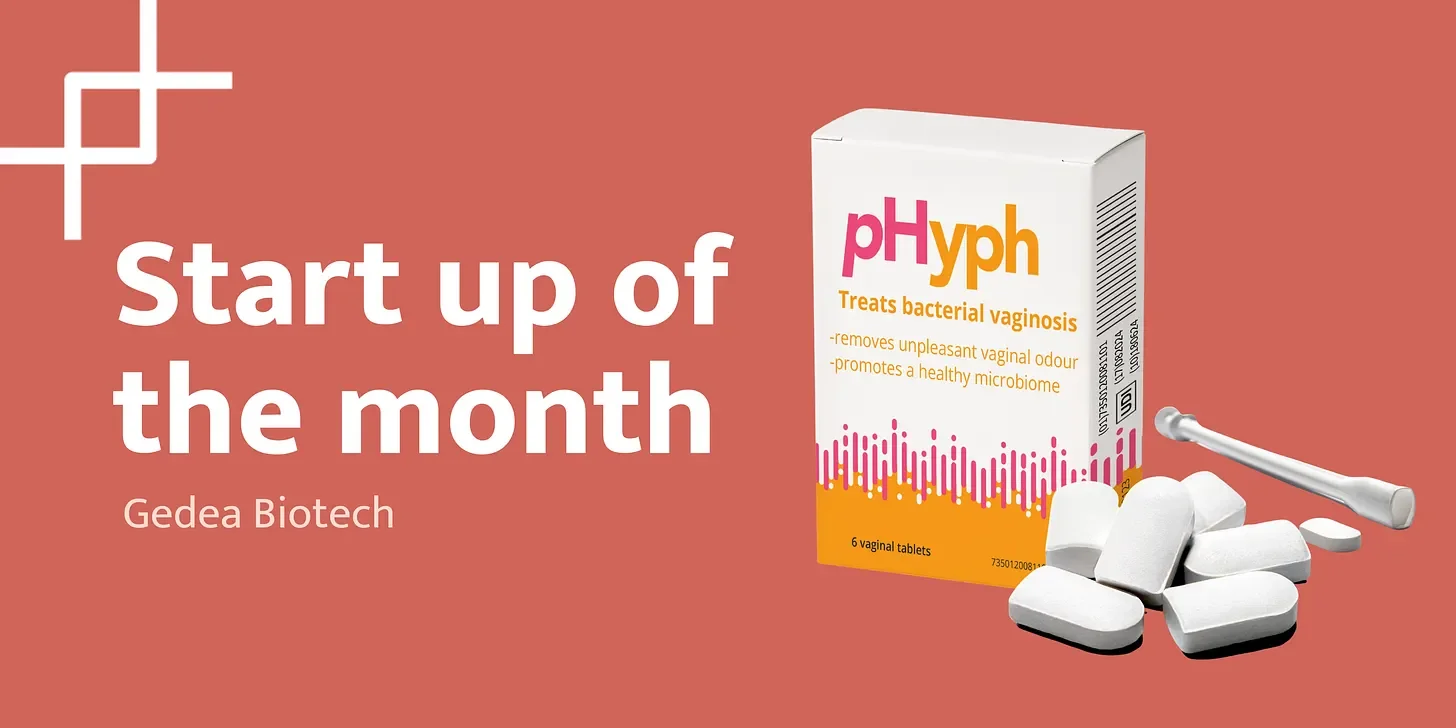
Building in a space that did not yet exist
When Gedea Biotech was founded as a spin-out from Lund University, “women’s health” was not yet widely recognised as a category.
For CEO Annette Säfholm, who has been with the company for close to a decade, the decision to join was driven by both the team and the potential of the product.
“I was introduced to a very engaged and committed team with a really interesting product idea. At the time, women’s health was not really a defined space - but that made the opportunity even more interesting.”
Today, the landscape looks very different. Awareness is growing, investor interest is increasing, and more companies are entering the field. However, Gedea Biotech represents a different kind of story - one of the early movers who have been building long before the spotlight arrived.
A different approach to treatment
At the core of Gedea Biotech’s solution is a shift away from antibiotics and towards supporting the body’s natural microbiome.
Their product is designed to:
Provide fast symptom relief
Enable over-the-counter access
Support long-term vaginal health instead of disrupting it
“Being over-the-counter is important, because it allows women to access treatment when they need it - without waiting for a doctor’s appointment,” says Annette Säfholm.
At the same time, the product is clinically validated and designed to support a healthy vaginal microbiome - now increasingly recognised as essential in women’s health.
Turning regulation into a competitive advantage
Like many companies in the space, Gedea Biotech has faced regulatory challenges - particularly with the introduction of the new Medical Device Regulation (MDR) in Europe.
“The changes in regulation came at a critical point in our journey and required much more extensive clinical documentation than expected,” says Annette Säfholm.
However, meeting these requirements has now become a key strength.
“Many products on the market today do not meet the new standards. Having passed MDR is now a significant advantage for us.”
The company recently achieved CE marking under MDR - a milestone that validates both the safety and efficacy of the product and enables commercialisation in Europe.
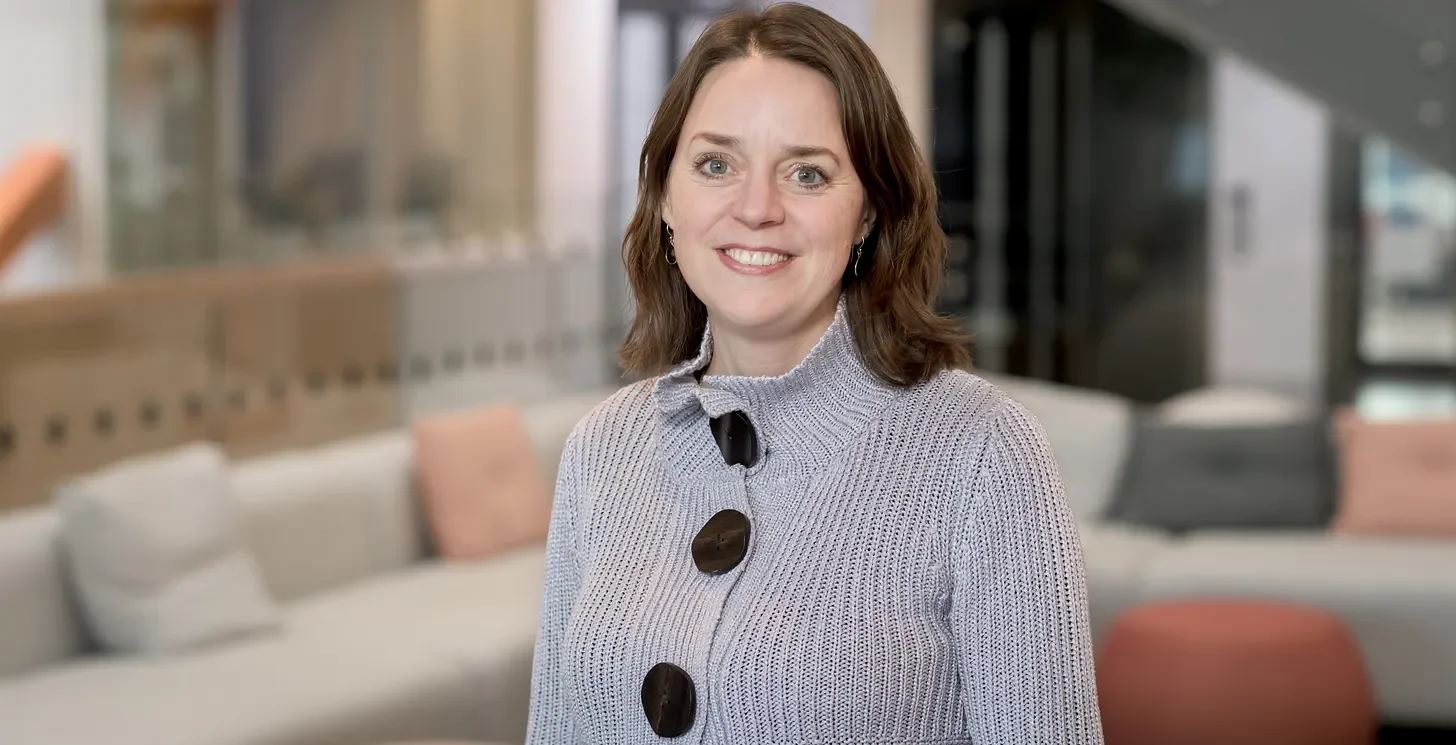
CEO Annette Säfholm
Rethinking the “niche” narrative
At Nordic Women’s Health Hub, we often hear that women’s health is perceived as a niche - and therefore a risky investment. For many founders in the space, that perception still creates barriers.
Gedea Biotech, however, has had a different experience.
So we asked: why?
“We have secured strong backing from experienced life science investors,” says Annette Säfholm. “They recognise both the unmet medical need and the commercial potential.”
Part of the answer lies in how clearly the case is defined.
Gedea Biotech is addressing a highly prevalent condition affecting hundreds of millions of women globally - with a clinically validated product and a relatively clear path to market.
A problem that is both urgent and commercially scalable.
But their journey also highlights something important:
Success in women’s health is not only about the strength of the idea - it is also about timing, regulatory pathways, and how the opportunity is framed.
“There is a huge market potential in women’s health, but it is still often underestimated.”
For many companies in the space, the challenge is not a lack of need - but the gap between that need and how it is understood by the market.
From Nordic roots to global ambition
With CE approval in place, Gedea Biotech is now preparing for commercialisation and entering partnerships for marketing and distribution.
While the Nordics remain an important home market - characterised by high awareness and strong healthcare systems - the company’s ambitions are global.
“Strong commercial partnerships are key to bringing our product to patients across multiple markets,” says Annette Säfholm.
A field finally gaining momentum
After more than a decade in women’s health, Annette Säfholm has seen the field transform from something barely acknowledged into a space gaining real traction.
“Women’s health was not spoken about at all when we started,” she says. “Today, we see large pharma companies entering the field and increased investor interest.”
For one of the early movers in the space, the shift is unmistakable.
What was once overlooked is now attracting attention - not just from startups, but from established players and larger investors beginning to recognise both the need and the opportunity.
And while funding gaps and research needs still exist, the direction is clear: women’s health is no longer on the sidelines. It is becoming a space you cannot afford to ignore.
For companies like Gedea Biotech, that shift is not just a trend - it is the result of years of building before the market was ready.
And importantly, it is now visible.
Because when companies like Gedea Biotech - led by experienced leaders like Annette Säfholm - can clearly feel the shift, it signals something bigger:
That the conditions for building, funding, and scaling in women’s health are changing.
And that opens the door for more companies to succeed.
