
Our most packed newsletter yet?
As we were putting together this month’s newsletter, we could not help but notice something: they are getting longer. And we see this as a good thing.
Because behind the growing word count is something bigger: more conversations, more collaborations, more international representation, more people entering the space, and simply more happening across women’s health.
This month alone, we have been part of discussions spanning everything from AI and healthcare systems to public debate, policy, ecosystem building, and international collaboration stretching all the way from Copenhagen to Shanghai.
And perhaps most importantly, women’s health is no longer sitting quietly on the sidelines. It is increasingly becoming part of the conversations shaping healthcare, investment, policy, and society.
Here is some of what happened throughout May - and a look at what is coming next.
In this issue, you can read about:
A recap from our Democracy Lab for Young Women
A teaser for our new Dynamic Ecosystem Map
Our co-founder Vanessa Carpenter at Shanghai Summit 2026
NWHH’s first public debate at Folkemødet
Member discounts for Health Summit 3.0
Sara Al-Dafaee reaches the semi-finals at DM i Debat
Meet our new Head of Knowledge & Research
Key takeaways from HIMSS Europe 2026
A look back at Global Forum 2026
Investor of the Month: Torsten Kolind
Startup of the Month: INGA Health
Young women are done staying quiet
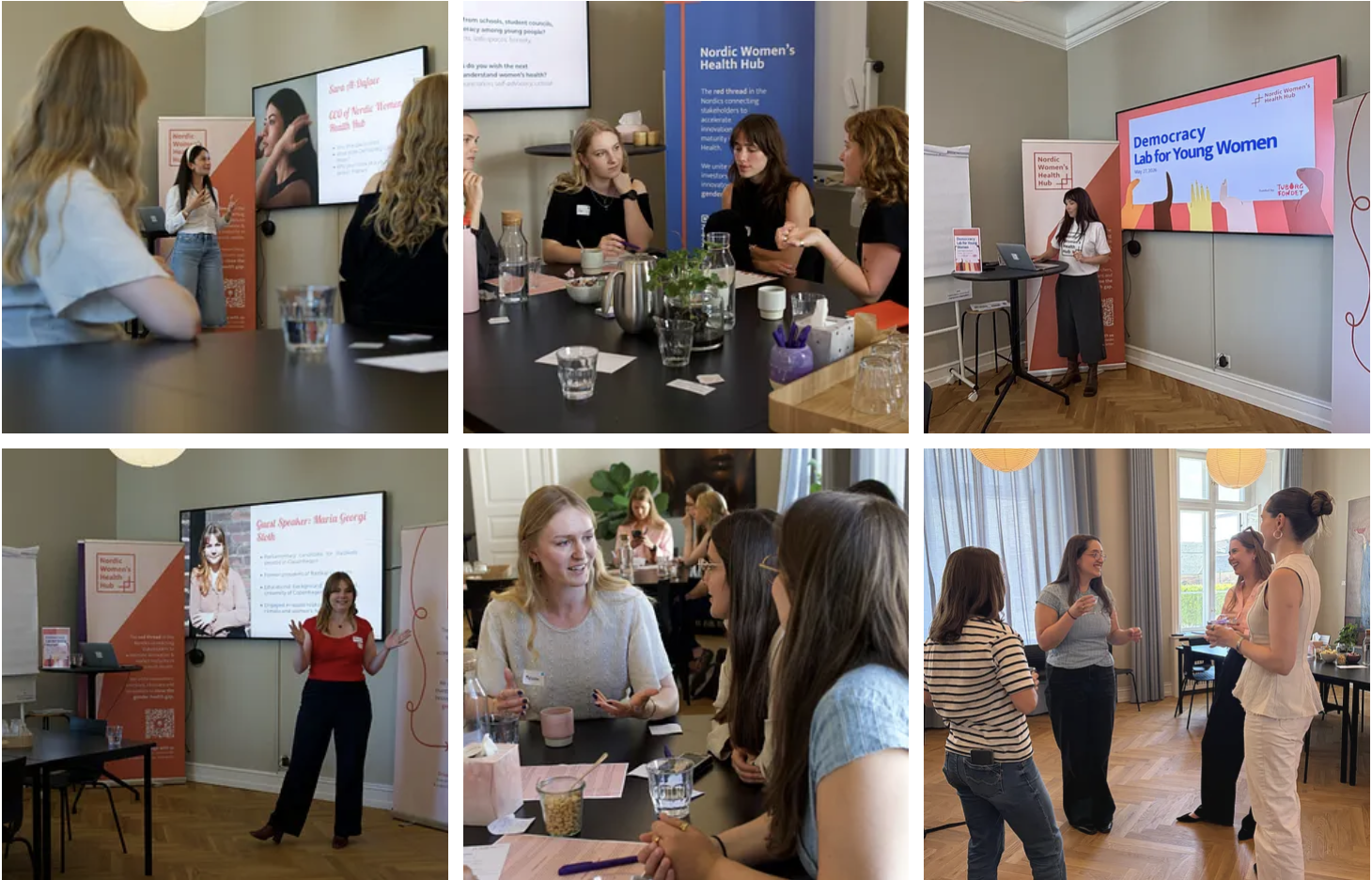
This month, Nordic Women’s Health Hub hosted our Democracy Lab for Young Women in Copenhagen - bringing together ambitious, outspoken, and engaged young women for conversations around women’s health, stigma, visibility, health literacy, and societal change.
The Democracy Lab, created in collaboration with Tuborgfondet, was designed as a workshop space where young women could share perspectives, challenge existing conversations, and help shape the future dialogue around women’s health.
And if there was one thing the event made clear, it was this:
The new generation is done waiting quietly for change to happen.
Throughout the event, participants openly discussed experiences and topics that previous generations were often expected to keep private or simply “deal with.” From healthcare dismissal and lack of education to taboo and misinformation, the conversations in the room reflected both frustration and a strong motivation to push these conversations forward.
The event featured a keynote from Maria Georgi Sloth, former parliamentary candidate for Radikale Venstre, who spoke about turning personal experiences within women’s health into political conversations and collective action.
The discussions and ideas from the day will now feed directly into our upcoming Youth Statement initiative.
Because conversations like these should not end when the event does.
👉 Want to help push women’s health conversations, visibility, and change forward? Become a member and be part of what comes next.
Behind the scenes: Taking the Ecosystem Map to the next level
Some of the most important work happening in women’s health right now is not always on stage, in headlines, or at events.
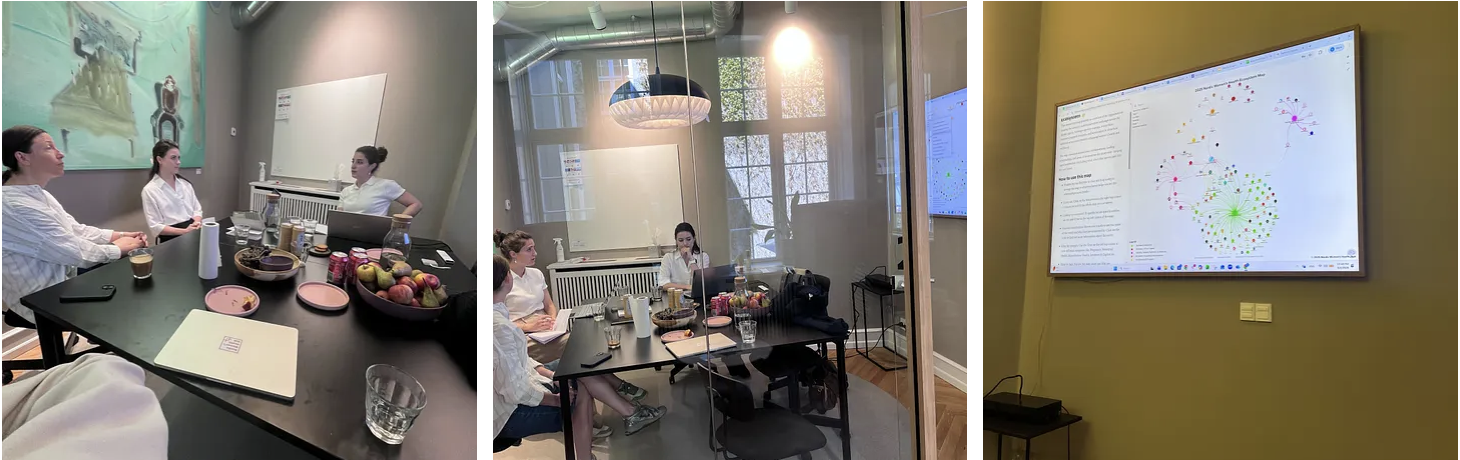
Behind the scenes, we are currently working on transforming our Static Ecosystem Map into a Dynamic Ecosystem Map - designed to make it easier to discover organisations, connect across sectors, and strengthen collaboration throughout the Nordic women’s health space.
Because one of the biggest challenges in women’s health is not a lack of people doing important work. It is fragmentation. Across the ecosystem, researchers, startups, investors, healthcare professionals, policymakers, and advocates are working towards many of the same goals - often in isolation from one another.
We want to help change that by making it easier to discover, connect, and collaborate.
Development is already underway, and we are planning to launch the Dynamic Ecosystem Map later this year. As part of this, our members will receive early access before the public launch.
And if your organisation is not yet part of the Ecosystem Map, now is the perfect time to join.
👉 Not on the map yet? Apply here.
From the Nordics to Shanghai
Women’s health conversations are becoming increasingly global - and this month, Nordic Women’s Health Hub will be part of bringing that conversation to Shanghai.
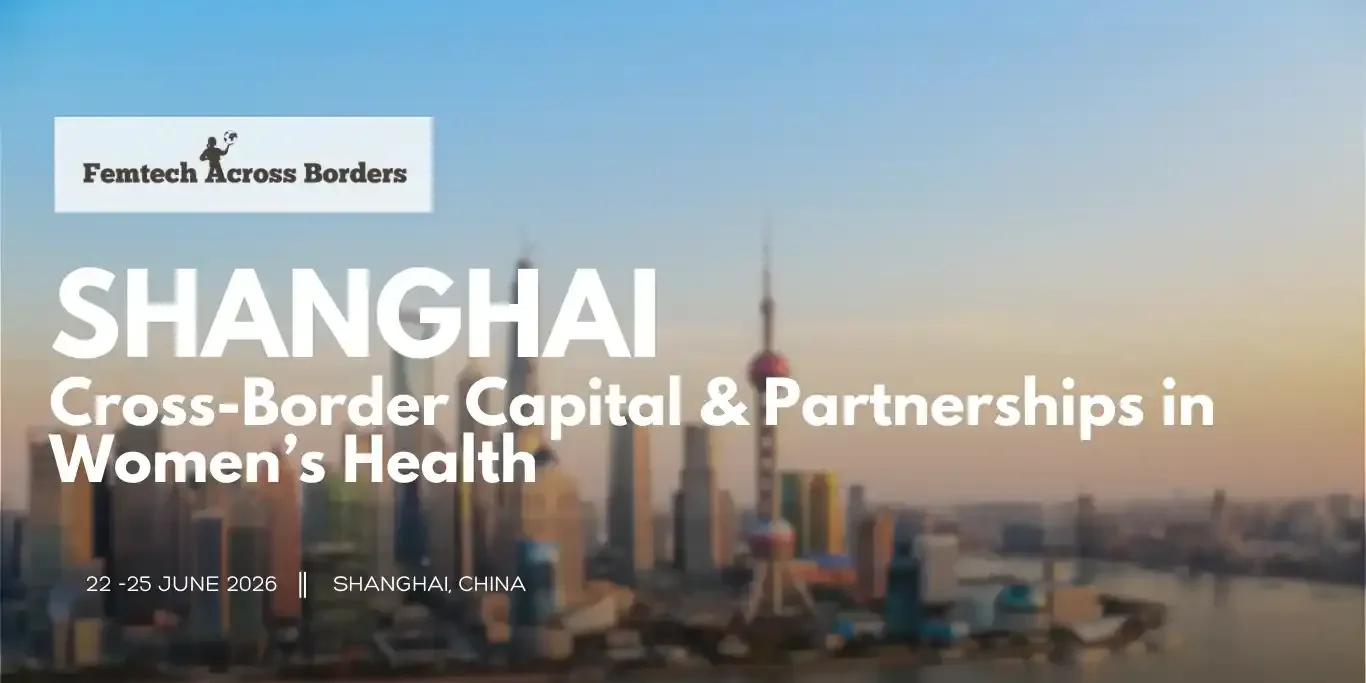
Our co-founder Vanessa Carpenter will be speaking at the Shanghai Summit 2026, joining international leaders, innovators, and investors for conversations focused on the future of women’s health innovation across East and West.
The Summit brings together actors working across femtech, healthcare innovation, investment, and ecosystem building - highlighting just how international the women’s health movement has become.
Because the challenges in women’s health are not isolated to one country or one healthcare system. And neither are the solutions.
We are proud to see Nordic perspectives represented in conversations shaping the future of women’s health on a global scale.
👉 Interested in joining the Summit? Learn more here and use NOR26 to receive a 30% discount on the Day 1 ticket!
NWHH heads to Folkemødet for the first time
This year, women’s health is making its way onto one of Denmark’s biggest democratic stages.
At Folkemødet, Nordic Women’s Health Hub has been given the opportunity to arrange a public debate on the newly allocated funding for women’s health in Denmarkand how those funds should be prioritised. The debate is arranged together with Health Tech Hub Copenhagen and supported by Industriens Fond and moderated by Hansen Agenda.
This also marks NWHH’s first time at Folkemødet - a reminder of how quickly the conversation around women’s health is evolving, and of NWHH’s growing role in helping shape it. You can meet our CEO, Sara Al-Dafaee and our co-founders Malene Enø and Vanessa Carpenter during the democratic festival in June.
We invite you to join the discussion and share perspectives on how the funding should be allocated:
Friday, 12 June, 15:00 at Handlingsskibet in Allinge, Bornholm.
Joining the debate are representatives from politics, research, business, investment, and startups, including:
Camilla Fabricius (The Social Democrats)
Eva Hoffmann (University of Copenhagen)
Mette Dyhrberg (Health Tech Hub Copenhagen)
Malene Enø (Nordic Women’s Health Hub)


Women’s health has been overlooked for far too long in both research and public debate. Despite women making up half the population, significant gaps remain in funding, knowledge, and innovation. That is why it matters that women’s health is increasingly finding its way onto political agendas and into public conversations.
Greater visibility and political attention are important steps towards ensuring that research, innovation, and investment are prioritised where they are needed most.
📍 Handlingsskibet, Allinge, Bornholm
🕒 15:00-15:45
Health Summit 3.0: Few spots left
Healthcare is changing rapidly - and Health Summit 3.0 is one of the places where healthcare leaders, innovators, researchers, and decision-makers come together to discuss what comes next. Nordic Women’s Health Hub is present on stage.
Want to join? We have a limited 50% discount available for members of Nordic Women’s Health Hub. Tickets are almost gone, so make sure to secure your spot soon.
👉 Sign up as a member here to access the discount code.
NWHH represented at ‘DM i Debat’
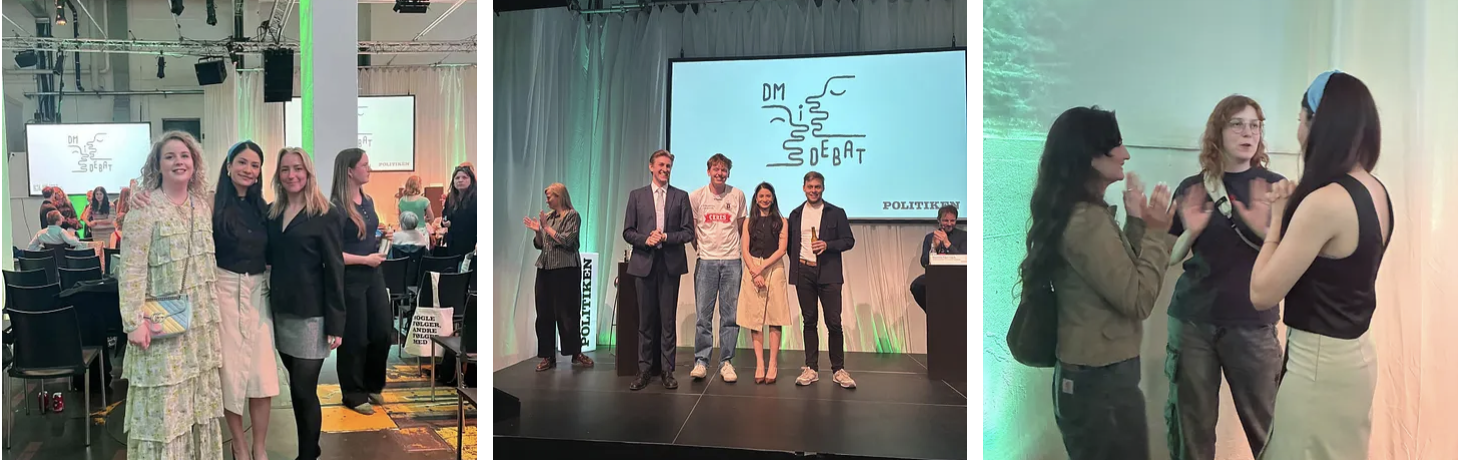
This month, our CEO and co-founder Sara Al-Dafaee took the stage at ‘DM i Debat’ (Danish National Debate Competition).
Hosted by Politiken (Danish national newspaper) and DUF (The Danish Youth Council), the competition brings together some of Denmark’s most talented young debaters to discuss politics, society, and the issues shaping our future.
We are proud to share that Sara advanced to the semi-finals, which will take place at Folkemødet on Bornholm.
Why are we so proud?
Because for a long time, women’s health was largely absent from conversations like these. Seeing it represented in spaces like this is a reminder of how far the conversation has come - and how much further it can go.

Welcoming our new Head of Knowledge & Research
One of the biggest challenges in women’s health is not only the lack of research - but the gap between knowledge and accessibility. Too many women still struggle to understand what is normal, what is not, and how to navigate healthcare systems that were never truly designed for them.
That is part of the reason why we are so excited to welcome Sarah Elisabeth Kall Lindqvist as the new Head of Knowledge & Research at Nordic Women’s Health Hub.
Sarah joins the Hub with a background in project management, digitalisation, systems thinking, and knowledge-sharing - combined with a strong passion for making women’s health research and information more accessible and understandable.
“I refuse to let the lack of education and knowledge about women’s bodies be the norm for future generations of women. I believe we can challenge the status quo through data, innovation, and making knowledge more accessible.”
Like many women, she has experienced on her own body how women’s health is still too often overlooked, underexplained, or dismissed. And she believes knowledge plays a critical role in changing that - not only for individual women, but for society as a whole.
At NWHH, she will help strengthen our work around research, knowledge-sharing, and translating complex information into something people can actually use.
Because awareness alone is not enough. People also need knowledge they can understand, navigate, and act on.
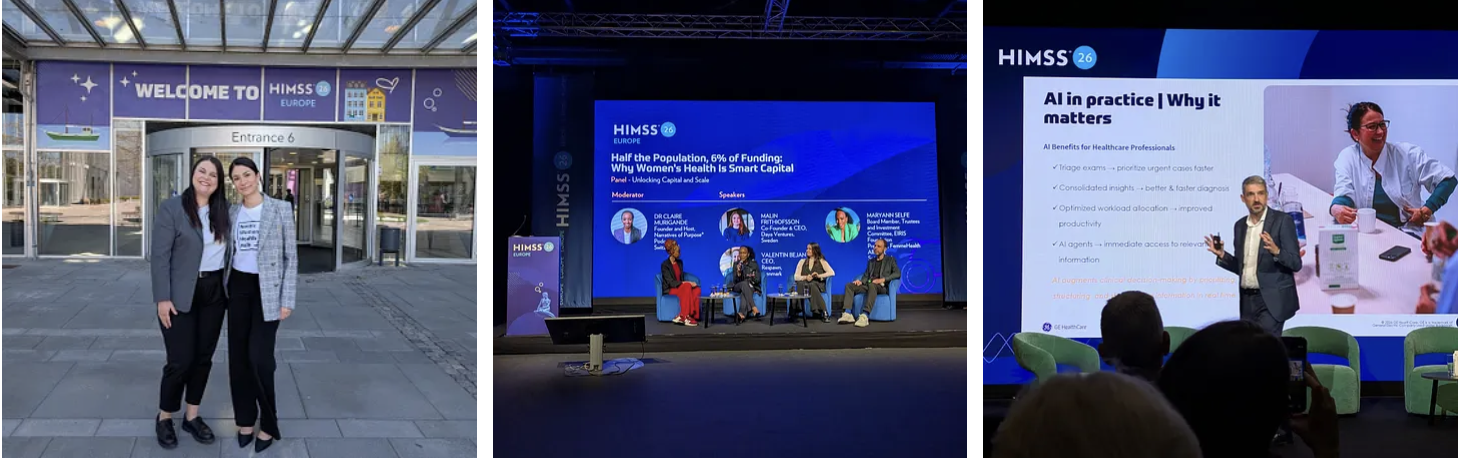
From policy to AI: What we took with us from HIMSS Europe 2026
This month, our CEO Sara Al-Dafaee and project coordinator Rossella Di Venere attended HIMSS Europe 2026 in Copenhagen - one of Europe’s largest gatherings focused on digital health, healthcare transformation, and innovation.
Across the many sessions and conversations, one thing stood out: women’s health is increasingly becoming part of larger conversations around AI, healthcare systems, accessibility, policy, and digital transformation.
From discussions on women’s health investment and evidence-based policymaking to conversations around responsible AI implementation and healthcare accessibility, the conference highlighted how interconnected the future of healthcare really is.
We left with new conversations, new perspectives, and a clear reminder that women’s health is becoming an increasingly important part of the future healthcare agenda.
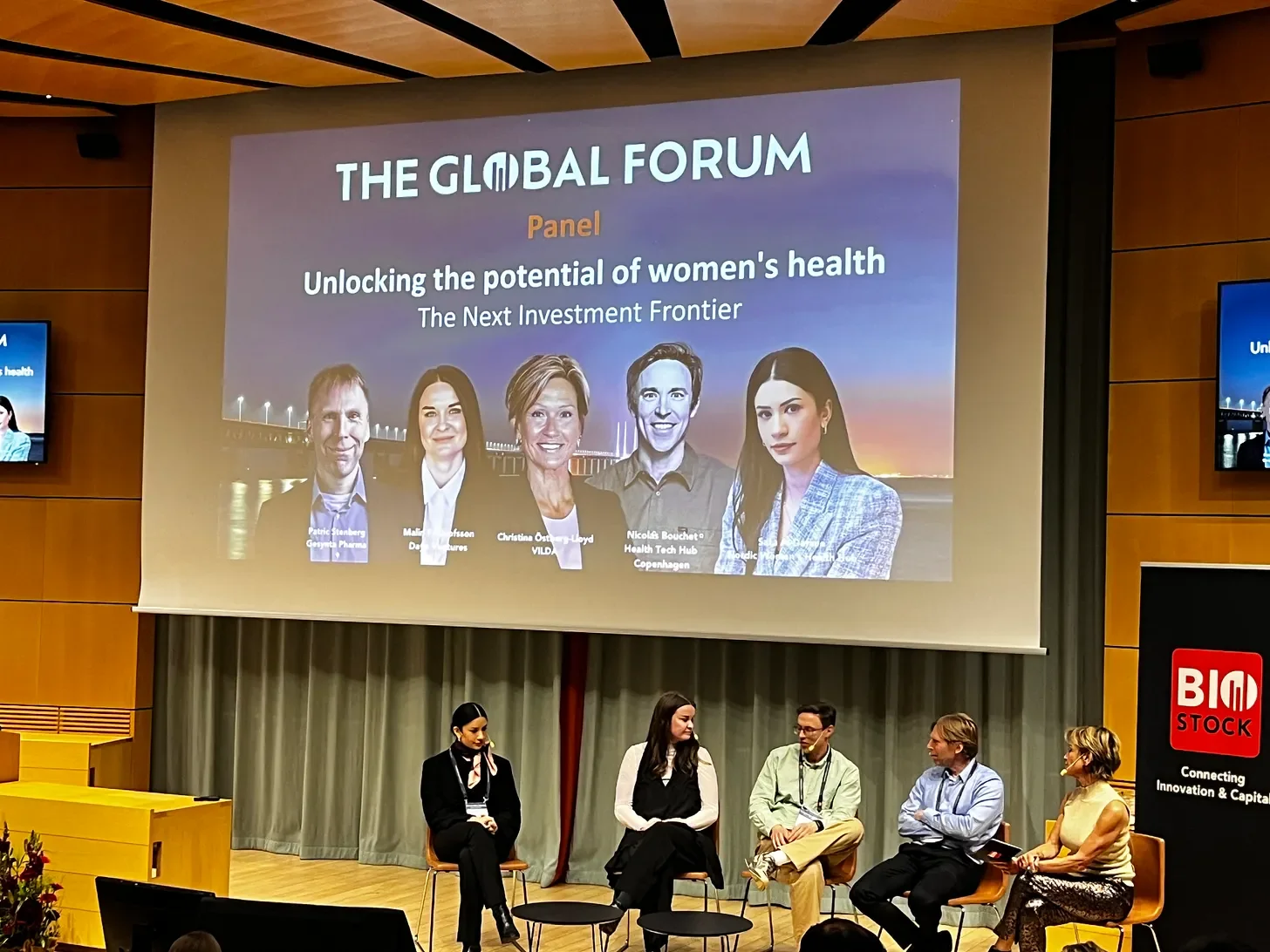
Women’s health is entering the investment conversation
Not long ago, women’s health was still treated as a niche topic within both healthcare and investment. That is slowly starting to change.
This month, our CEO and co-founder Sara Al-Dafaee joined Global Forum 2026 for the panel discussion “Unlocking the potential of women’s health: the next investment frontier” alongside investors, founders, and ecosystem leaders working across the space.
The conversation touched on everything from gender precision medicine and healthcare data to investment barriers and the need for stronger cross-sector collaboration. But perhaps most importantly, it reflected something bigger: women’s health is increasingly being taken seriously as part of the future of healthcare innovation and investment.
There is still a long way to go. But compared to just a few years ago, far fewer people in these rooms are questioning the importance of women’s health.
👉 Missed the conversation? Watch the full panel discussion here.
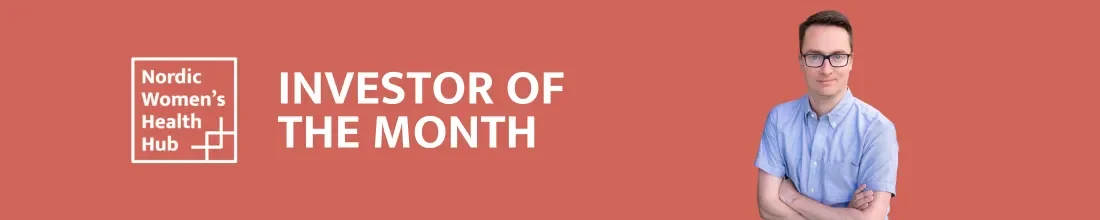
Investor of the Month: Torsten Kolind
What separates the founders who get the next meeting from those who do not?
This month, we sat down with investor and former founder Torsten Kolind to talk about fundraising, women’s health investing, and what makes him lean forward when hearing a founder pitch.
One point stood out:
“The goal is not to convince someone to invest. The goal is to make them interested enough to ask for the next meeting.”
From commercial evidence and founder mindset to why women’s health still struggles to attract capital, Torsten shares what he has learned from both sides of the table.
👉 Read the full interview here.
Startup of the Month: INGA Health
More than 30% of births are now induced. Yet labor induction still relies on decades-old technology.
This month, we spoke with INGA Health, a Finnish startup on a mission to modernise maternity care and improve one of the most common procedures in childbirth.
Because behind the technology sits a bigger question:
Why have we spent so little time improving an area of healthcare that affects millions of women every year?
INGA Health is working to change that.
👉 Read the full interview here.
