
Women’s experience during childbirth remains overlooked and labor induction methods are decades out of date
INGA Health is on a mission to change that.
Women’s experience during childbirth remains overlooked and labor induction methods are decades out of date. INGA Health is on a mission to change that.
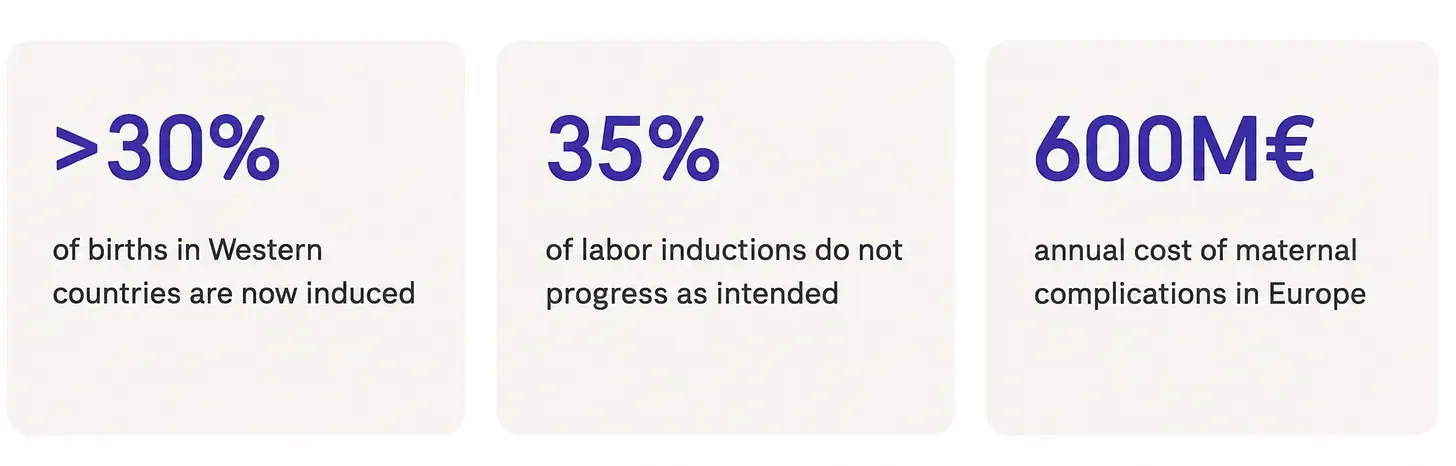
Over 30% of births are now induced using tools that are decades old and originally designed for male urinary use. The team behind INGA Health is building something better - for patients and healthcare providers alike.
Why we selected INGA Health as Startup of the Month
Because labor induction affects millions of women every year, and the tools used have barely changed in decades. INGA Health is not just building a better product, but also challenging what the field measures, what it values, and what it has chosen to ignore for too long. That is exactly the kind of work we want to highlight.
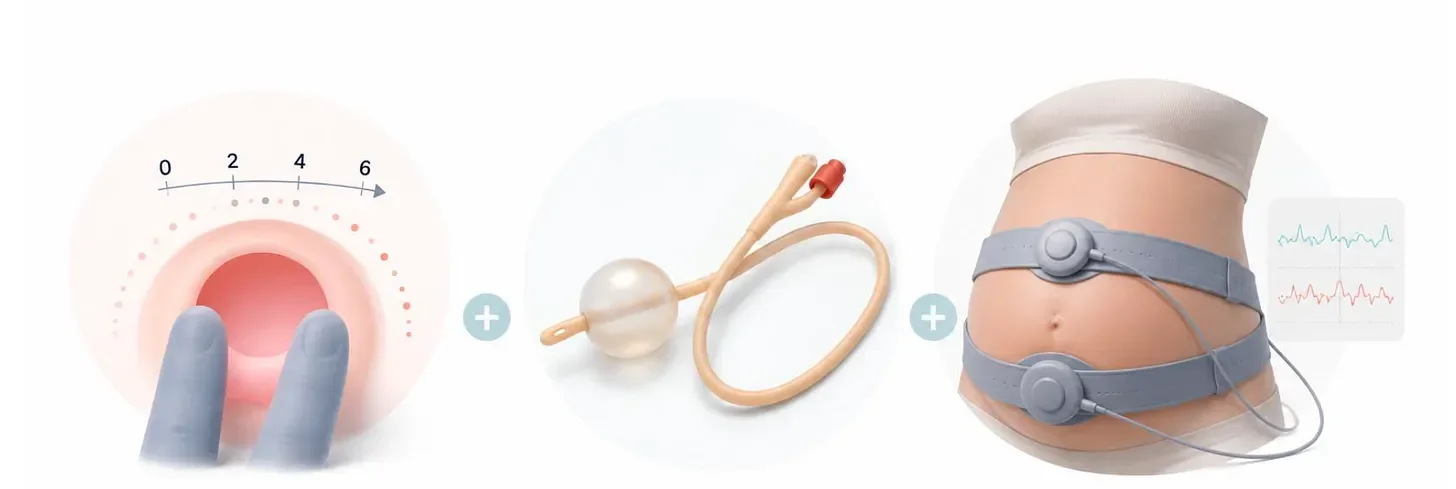
In Finland, more than one in three births is now induced. Across Western countries, the rate exceeds 30%, and it has been climbing steadily for decades. Yet the standard procedure still relies on manual cervical assessments, a catheter originally designed for male urinary use, and wired technology that limits both patient experience and equity.
Labor has long been treated as a purely clinical event. INGA Health believes it is time to treat it as a human one as well.
15 years of research and one clear problem
INGA Health was founded in 2022 as an Aalto University-based project by Hanna Castrén-Niemi, MBA, and clinical researchers Dr. Leena Rahkonen and Dr. Heidi Kruit: two maternal-fetal medicine specialists who have collaborated on labor induction research for over 15 years.
They have helped change the field of labor induction in Finland and established remote monitoring practices at Helsinki University Hospital.
One thing led to another: Hanna and Leena first connected through the Biodesign Finland program that same year, bringing together clinical depth and entrepreneurial and commercial drive in a founding team built to solve this problem.
Shortly thereafter, Dr. Leena brought Dr. Heidi on board, and together they bring extensive shared clinical and research expertise to the core team.
In 2024, Carolyn Kreuzkamp, MBA, joined as U.S. healthcare strategist and grant advisor, adding critical commercial expertise to support U.S. market entry.
Their solution is the INGA Health Cervical Ripening Platform™: a smart catheter combined with a wireless biometric monitoring system, a clinical dashboard, and a patient app - giving both clinicians and women real-time insight into what is happening during induction.
The reception from healthcare professionals in Finland, Estonia, and the US has overall been positive. As the team explains:
“One important reason is that the solution fits naturally into existing hospital workflows. We are not replacing current procedures completely - we are improving an existing solution.”

The outcome no one is measuring
For decades, labor induction has largely been guided by intermittent observations, manual assessments and clinical judgement. Yet no two births unfold in exactly the same way, and predicting how an induction will progress remains difficult.
Some inductions progress smoothly. Others result in prolonged labor, emergency interventions or unplanned C-sections. Yet clinicians often have limited ability to predict which patients are at risk.
That is the challenge INGA Health is ultimately trying to address.
Through its intelligent monitoring system, women can spend part of the induction process at home or outside the hospital setting while both they and their clinical team follow real-time biometric data remotely. The platform integrates directly into hospital systems, reducing pressure on hospital beds and staff while creating a more connected and comfortable experience for women.
But the longer-term ambition extends beyond monitoring.
Every birth generates a new data point. As the platform scales, the accumulating dataset of real-time in-utero biometrics will form the foundation for IngaIQ™ - the company’s Predictive Childbirth™ clinical AI tool. The goal is to help clinicians anticipate how an induction is likely to progress before complications arise and move obstetric care from reactive decision-making toward a more predictive and personalised model.
Barriers that will sound familiar
For anyone working in women’s health, the obstacles INGA Health has faced will be recognisable.
Like many startups in women’s health, INGA Health found that securing funding was not always straightforward.
Their earliest application to the Finnish government required explaining not only what they were building, but why it mattered - a step that should not be necessary, but still is.
Since then, they have secured $4.5 million in non-dilutive funding, including a highly competitive ARPA-H Sprint for Women’s Health award from the US government. Only 23 companies were selected from roughly 1,700 applications. INGA Health was one of only two companies based outside the United States.
European regulation has been the other significant barrier for the startup. Longer timelines and more complex processes than in the US are also part of the reason why INGA Health plans to enter the American market first, with FDA 510(k) submissions targeted for October 2026 and a projected US market entry in spring 2027.
The first step, not the last
Clinical trials are now underway in Finland, Estonia, and the US. The team is seeking follow-on investment to fund pivotal studies and the path to CE marking. Their longer-term vision is an AI-driven platform giving clinicians real-time predictive information about how labor is progressing - a capability that does not yet exist.
When we asked what success looks like, the answer said everything about why this team is worth watching:
“Success means our catheter and monitoring solutions are widely used and that women have better experiences than with current solutions. For us, this is only the first step toward making labor and delivery safer. This is not only about one product. It is about continuing to solve problems within maternal healthcare.”
And that is exactly what INGA Health is working toward: better maternal experiences for women everywhere, one step at a time.
