
From dismissal to discovery: GynQura targets the biology of endometriosis
In March, Nordic Women’s Health Hub turns its focus to endometriosis - a condition affecting millions, yet historically overlooked.
As Startup of the Month, we speak with GynQura - a start-up working to change how the disease is understood and treated. Their ambition emerges at a time when endometriosis is beginning to move from the margins to the research agenda.
Long overlooked in research and funding
Endometriosis affects an estimated 10% of women worldwide. Yet for years, it has been dismissed as “just painful periods” - a framing that has shaped both public perception and scientific attention.
Only in recent years has it begun to be recognised as a complex, chronic disease. The long-standing minimisation has contributed to limited research, funding and data.
“The urgency has been there for a long time,” says Maj Hedtjärn, Entrepreneur-in-Residence at GynQura. “Women have needed better solutions for years.”
What may be changing now is not the pain - but the conditions for innovation.
Across the ecosystem, we see increasing recognition of endometriosis as a serious chronic disease. As awareness grows, so does the willingness to invest in understanding its biology - creating new space for start-ups like GynQura

Moving beyond symptom control
GynQura is incubated at the BioInnovation Institute with a clear focus: to move beyond symptom control and work toward therapies that address the underlying biology of the disease.
Today, most patients are offered hormone-based treatments or surgery. These options can relieve symptoms, but they do not prevent recurrence or fundamentally alter disease progression.
GynQura is developing disease-modifying therapeutics designed to target the pathobiology of endometriosis rather than manage symptoms through hormonal suppression.
In a field long dominated by symptom management, this represents a fundamentally different ambition.
Building better models
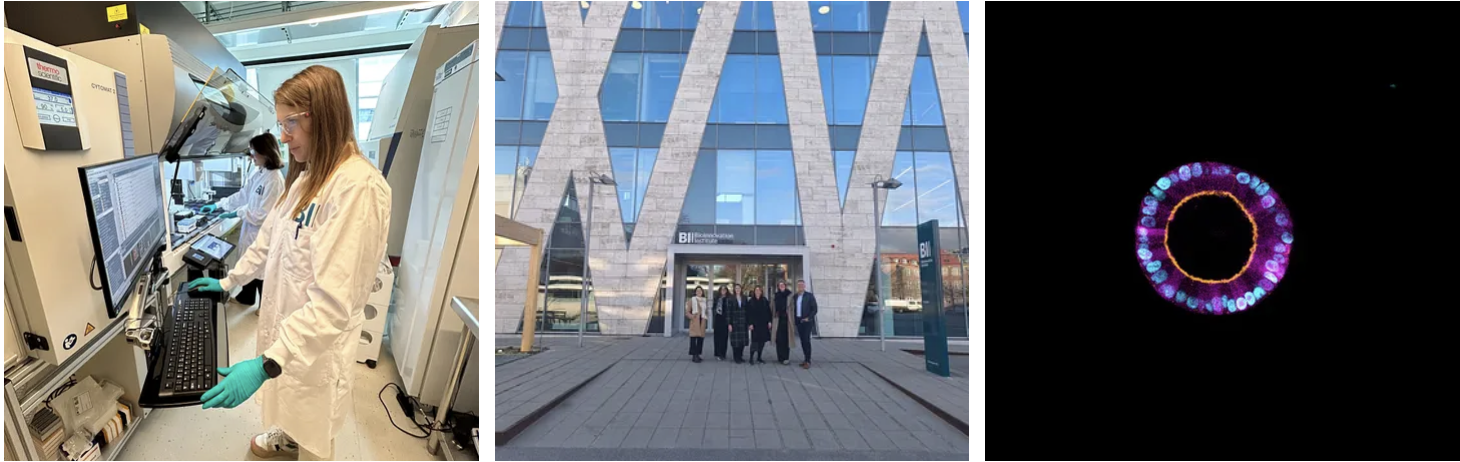
The start-up builds on patient-derived organoids originally developed at KU Leuven - three-dimensional cellular models that retain key features of patients’ own disease biology.
In a heterogeneous condition like endometriosis, biological relevance matters.
“Endometriosis is complex and poorly understood. Patients differ significantly, and we lack clarity on the most promising therapeutic targets,” explains Maj Hedtjärn. “If we want better treatments, we need better models.”
Over the past year, the team has narrowed a shortlist of potential therapeutic targets and established organoid-based assays capable of measuring disease-modifying phenotypes. Rigorous validation at this stage is central to the start-up’s strategy before moving into broader fundraising.
A shift in attention
While GynQura has not yet entered an active fundraising phase, the response from investors has been encouraging.
“I have been positively surprised by the level of interest,” says Maj Hedtjärn. “There is a clear acknowledgement that this is a disease with a significant unmet need.”
She cannot say with certainty why the shift is happening. It may be the rising awareness of endometriosis. It may be the maturation of disease models. It may simply be timing.
