50% provoked. 50% inspired: Investor of the Month on why women’s health is a no-brainer
This month, we kick off our new Investor of the Month series with exited founder and investor Ulla Sommerfelt, who has chosen to focus her time, capital, and experience on women’s health.
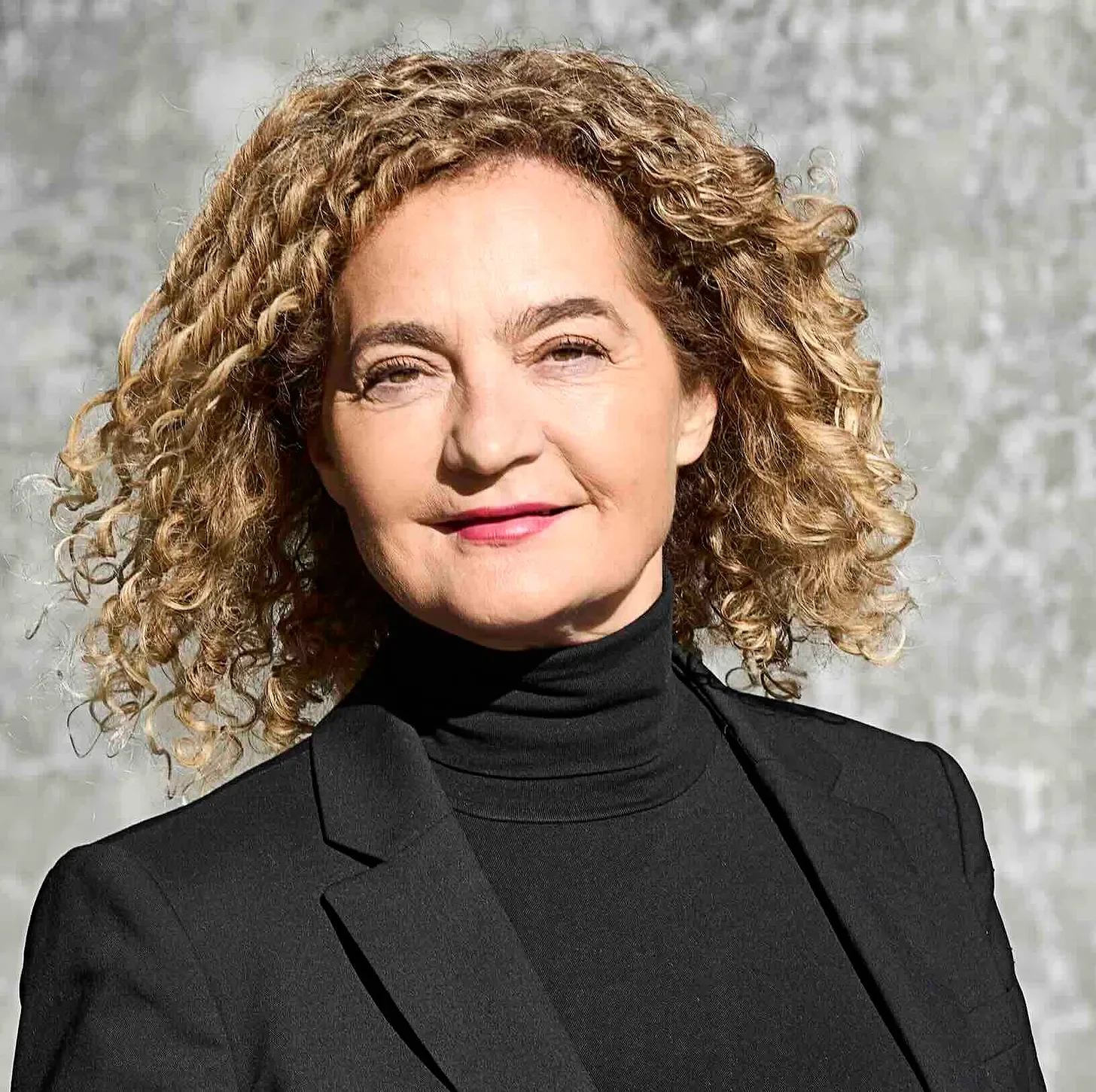
“The more I learned, the more fascinated I became. I was 50% provoked and 50% inspired,” she says.
As she learned more about the field, the numbers spoke for themselves. Women’s health affects half the population, yet only a small share of global health capital is allocated to it. Entire areas - from chronic pain conditions to menopause and hormone-related disorders - have historically received limited research funding and even less venture attention. That reality informs where she chooses to place her capital.
In our conversation, she shares what she looks for in founders, where she believes capital is still missing, and why most of the opportunity in this space is still ahead of us.
From exited founder to women’s health investor
After stepping away from her day-to-day CEO role around the summer of 2023, she had the opportunity many founders dream of: the freedom to choose what to build next and what to back.
She had already made her first FemTech investment a few years earlier. But as she leaned further in, something clicked.
She describes the journey as personal. Women’s health is everywhere once you start looking.
“I can personally connect with it. I am a woman. I am a mother. I have a daughter. I have a sister. I have friends. And on that journey, you become aware of how much you have found yourself accepting - and how little you actually know.”
That mix of personal connection and clear unmet needs is what drives her focus today.
Not niche. Not emerging. Maturing.
Women’s health has often been framed as niche, then as emerging. She argues we are past that.
“It has flown under the radar for many years, but there has been enormous development in knowledge and awareness,” she says. “I can feel it as a wave that has started - and it just gets stronger and stronger.”
Beyond increased attention, she points to something more concrete: exits.
Over the past few years, a growing number of women’s health companies have exited, shifting the category from “interesting” to “proven.”
At the same time, she does not see a crowded market. The space may be evolving, but most of it is still untouched.
“95% of the market is still up for grabs,” she says.
Where capital meets blind spots
Despite the momentum, she sees a clear mismatch between where capital flows and where women’s health needs sit.
“90% of the invested capital in women’s health today is concentrated in reproductive health, maternal care, and cancer treatments,” she explains. “That means all the other areas that need attention are still receiving very little.”
In other words, the market is not small - it is uneven.
She links the imbalance to historic bias: women have long been viewed primarily through a reproductive lens, and the healthcare system has prioritised what is considered “sexy” to solve.
“It is very sexy to cure cancer,” she says. “But it is not as sexy to address lymphoedema after breast cancer, even though many women struggle with it.”
Capital tends to follow what gets visibility and prestige. In women’s health, that has left large parts of the field underfunded.
What makes a women’s health startup investable?
Some criteria are universal: team strength, execution ability, market size, and a clear path to returns.
But in women’s health, she looks for something more.
“I personally look for something meaningful,” she says. “Not something that is only about moving fast and breaking things - but building something that improves the lives of the people it is meant to serve.”
She also points to a recurring pattern. Many founders in women’s health are building their first company. As a result, the sector does not yet have a long track record of exited founders feeding experience back into the ecosystem. Competence, not just capital, is hard to come by - something we are trying to fix in Femtech Studios.
“There are not that many exited founders in women’s health yet. So it becomes important to pull the right people into the team - advisors, board members, early hires - the ones who can help you execute and grow.”
Her mantra is simple, yet effective: “It takes a village to grow a startup.”
From validation to performance
She also pushes back against the perception that the category is financially fragile. Data from specialised funds such as Foreground Capital suggests that women’s health investments have shown resilience during downturns compared to broader health sectors.
Performance data adds another layer.
“90% of femtech founders are women. Fortunately. Because female founders outperform all-male teams by 63%, and that is good news for me as a femtech investor.”
For her, the conclusion is straightforward. This is not impact investing dressed up as venture. It is disciplined capital allocation in a market that is gaining legitimacy, showing exits, and delivering returns.
Simply put, it is good business.
Beyond management: where she sees real opportunity
When asked where she would like to see more innovation, she does not hesitate.
There is no shortage of tracking apps and symptom management tools in women’s health, she notes. What excites her more is advanced diagnostics, biomarkers, and deep tech solutions that move beyond the management of symptoms toward understanding and treatment.
“I think the next wave will be more about diagnostics and personalised solutions,” she says.
She is also direct about where the logic does not add up.
In 50% of infertility cases, male factor plays a role. Yet hormonal treatments, injections, and physical procedures are still carried by women.
“It is the only condition where we systematically treat the person who is not sick,” she says.
The same pattern appears in contraception. “Women take on the hormones and the side effects. Male solutions are deprioritised when side effects occur. Women can only get pregnant a couple of days a month, whereas men can make a woman pregnant 24/7. Why are women the ones who need to carry the burden of contraception?”
For her, it points to an imbalance that deserves attention.
A myth she wants founders to stop repeating
She also addresses a common misunderstanding in the ecosystem - the idea that male investors do not invest in women’s health.
“I completely disagree with that,” she says. “I co-invest with several men - more men than women, actually.”
In her experience, capital is not as gendered as many founders assume. Male investors are already active in the space, and engagement is increasing.
She points to two drivers. First, the category has gained legitimacy through data, research, and exits. Second, the conversation has moved into everyday life.
“There are many men who have female partners or daughters. Especially those with daughters,” she says. “Their daughters do not stay quiet, like my generation did. They talk about it. And those men have to relate to it.”
Her advice to founders is straightforward:
Do not base your fundraising strategy on assumptions about who will care. Look at who is already investing - and approach them accordingly.
Numbers - and emotion
When asked what advice she would give founders, she does not overcomplicate it.
Be clear about the problem you are solving. Be clear about the size of the market. Be clear about your traction and your path to revenue.
And then:
“Numbers, numbers, numbers,” she says.
But she adds something founders in women’s health sometimes shy away from - even though it, in some cases, is one of their strongest tools.
“Do not be afraid to connect emotionally. We address something extremely vulnerable. Often full of stigma, taboo, and shame,” she says. “The ability to tell that story so someone who has never experienced it can understand - that matters.”
In women’s health, a strong pitch combines solid numbers with a clear articulation of the human impact behind them.
Think global - and think beyond one product
On scale, her view is direct: most women’s health solutions have global relevance, and founders should plan accordingly.
“Think global first,” she says. “You can start locally, but build the global strategy early.”
She also expects more consolidation in the years ahead.
“It is very hard to scale a single product to venture scale,” she says. “I think we will see more M&A - companies combining solutions for the same target group.”
For founders, this expands what growth can look like. Building something valuable does not always mean building a unicorn.
The Investor of the Month takeaway
What stands out in speaking with Ulla is the combination of conviction and pragmatism.
Women’s health, in her view, is not a theme or a trend. It affects half the population. It is a market with documented exits and a field where large parts are still underfunded. However, capital is concentrated in a few familiar areas, while significant unmet needs remain in areas like diagnostics, menopause, pelvic health, male fertility, and advanced treatment development.
At the same time, she is clear about what it takes to build in this space. Strong teams. Serious numbers. A global mindset from day one. And the humility to surround yourself with people who have done it before.
For her, investing in women’s health is neither symbolic nor ideological. It is commercial logic combined with lived experience - and a long-term commitment to building companies that can scale.
Fact box
Ulla Sommerfelt, exited founder and active women’s health investor
Co-founder and former CEO of EGGS Design, scaling the company to 130+ employees across Norway and Denmark
Founder & CEO of Mother Hen Ventures, investing in early-stage startups and scale-ups
CEO & Founder of Femtech Studios, a design-driven venture studio specialising in women’s health
Board member at Danish Business Angels (DanBAN)
Executive in Residence at StartupLab (Norway’s largest tech incubator)
Angel investor and mentor across health and tech, with a focused commitment to women’s health over the past 2-3 years
Has invested in, among others: Induvita, UVISA Health, Aisel Health, Caramma, Sylvia Health, WIN Ventures, and Previto